Drug testing sounds straightforward until THC enters the conversation. Cannabis laws have changed dramatically across the United States, but drug testing policies have not always kept pace. As a result, many people find themselves asking questions such as:
- Does a 4-panel drug test include THC or marijuana?
- If cannabis is legal in my state, can I still fail a drug test?
- Why do some employers test for THC while others do not?
- How long can THC stay in my system after I stop using cannabis?
- Are medical marijuana patients exempt from workplace drug testing?
- Are all 4-panel drug tests the same?
The answers depend on the specific test, the organization ordering it, and the type of THC screening being used. Understanding these distinctions can eliminate a great deal of confusion and help you approach drug testing with realistic expectations.
What Are 4-Panel Drug Tests?
A 4-panel drug test is a screening test that checks for four categories of drugs in a person’s system and can be administered through urine, saliva, or sometimes blood, although urine screens are by far the most common. Detection windows vary depending on the drug, frequency of use, metabolism, and the testing method. For urine testing, many substances can be detected for a few days after use, while chronic marijuana use may remain detectable for several weeks.
The word “panel” in “4-panel” refers to how many drug categories are included in the screening. For example, a 4-panel test includes four categories, whereas a 5-panel test includes five and so on. These panels can be customized depending on workplace requirements, legal conditions, or medical settings. One panel might replace marijuana with benzodiazepines or another commonly misused substance, for instance, considering there is no universal standard that applies to every employer or agency. The screened drugs depend entirely on which substances the specific testing organization includes.
What Drug Tests Measure
In most cases, a 4-panel drug test—most commonly used in federal workplace settings, probation programs, and some clinical environments—screens for:
- Opiates (such as morphine, codeine, and heroin)
- Cocaine
- Amphetamines (including methamphetamine)
- PCP
Notably, THC is not part of this traditional panel, as a basic 4-panel test does not check for marijuana metabolites.
That said, many employers and organizations customize their panels. Some substitute THC for another category, and some add THC on top of the 4 categories but still refer to the test informally as a 4-panel. To add to the confusion, employers, treatment programs, and legal agencies often use the term “4-panel” loosely. They may purchase testing kits that include additional detection strips but still think of the test as a 4-panel, seeing as it includes their four priority substances. Some off-the-shelf tests sold in pharmacies or online also include THC even when marketed as a 4-panel test. Because of these inconsistencies, you should never assume that a test excludes THC unless you verify the exact substances included.
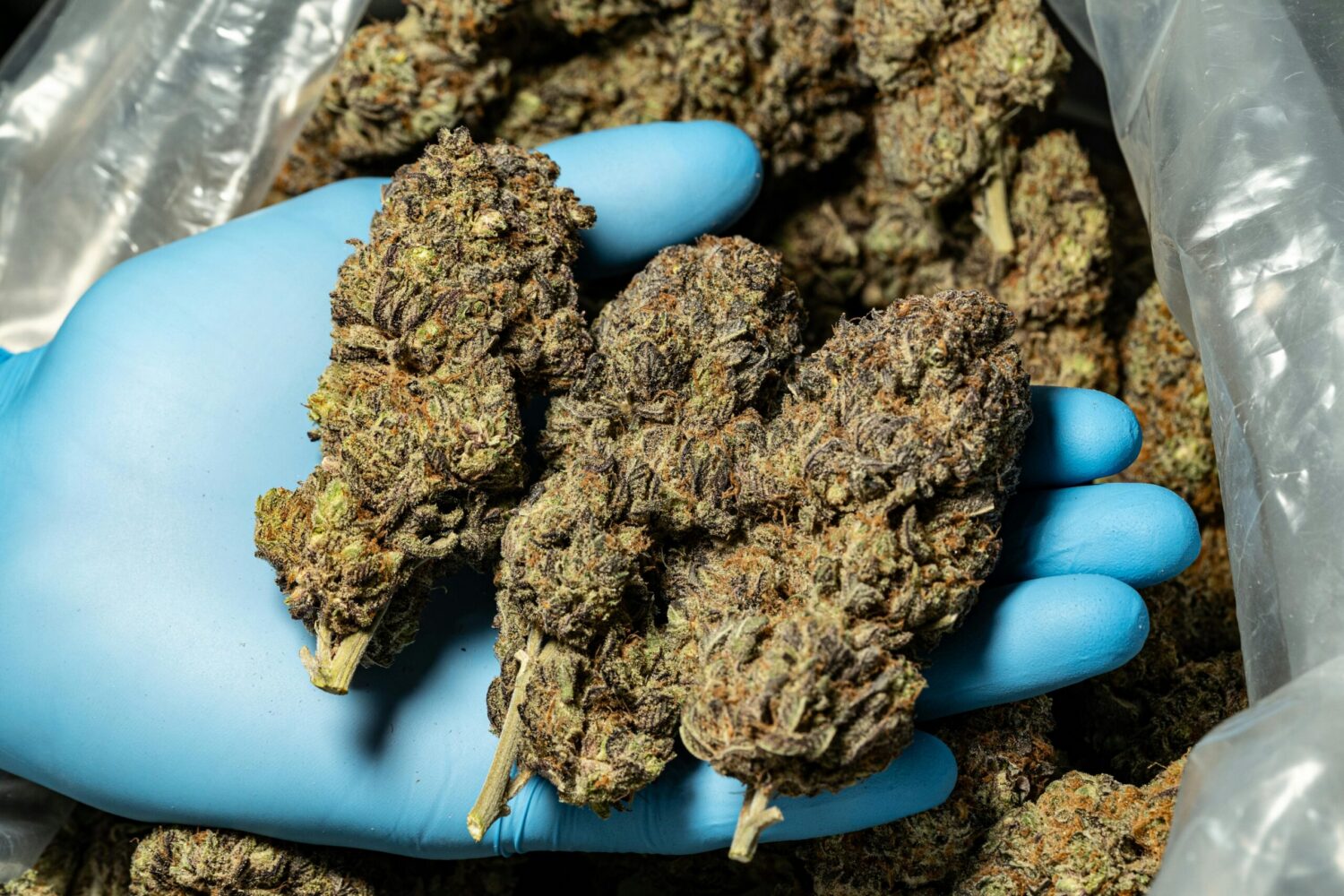
If a drug test administrator does include THC as a panel, do note that most tests do not look for the active compound THC. Instead, they look for THC metabolites, primarily THC-COOH, which is stored in body fat and released slowly over time. This is why cannabis can be detected for far longer than most other substances: even though THC’s psychoactive effects wear off within hours, its metabolites linger. Cannabis users, especially regular users, often test positive for days, weeks, or sometimes over a month depending on frequency and metabolism.
Drug Testing Policies and Environments
Let’s break down how different environments approach THC testing.
- Workplace Environments: Workplace drug tests vary widely. Some employers care about cannabis, while others do not. Some remove THC from screening panels because cannabis is legal in their state. Others continue to test for it regardless of legality. Federal employers, safety-sensitive positions, and transportation jobs regulated by the DOT still require THC testing regardless of state law, using 5-panel or 10-panel screens, rather than a true 4-panel test. In standard workplace testing, however, THC is included unless the employer specifically removes it. Even if an employer uses a 4-panel test, it may be customized. Always ask HR or review the drug testing policy.
- Healthcare Settings: In healthcare settings, providers may or may not test for THC depending on why the test is being performed. Pain management programs often screen for THC because of medication contracts and to ensure medication safety, whereas psychiatric programs vary depending on their policies.
- Addiction Treatment Centers: Needing help monitoring patient progress, treatment engagement, or relapse patterns, addiction programs often include THC in their screenings. An important consideration here, though, is that a positive THC detection does not always lead to punitive action, and many programs use testing for clinical insight rather than punishment.
- Probation and Court-Ordered Testing: Probation and court-ordered testing nearly always include THC. Even when a test is described as a 4-panel, probation departments may use different terminology internally or call their test a 4-panel simply because the test focuses on the four priority substances. Always ask directly which drugs are tested.
- Educational and Youth Programs: Schools, sports organizations, and certain youth programs frequently test for THC. They may use rapid cups or lab-based testing that detects cannabis, even if they refer to the test as a multi-panel screen without specifying the number.
- At-Home Tests: If the goal is self-monitoring, at-home tests are easy to obtain and regularly include THC because consumers expect it. Always read the label to confirm.
THC Detection Windows
When people express confusion surrounding THC and drug testing, the question typically is not just “Does a 4-panel drug test for THC?” Under that question lies another: “Will a drug test pick up on my usage of THC?”
THC stays in the system far longer than most other substances tested in drug screens:
- For occasional users, THC may be detectable for three to five days.
- For moderate users, THC may remain detectable for one to two weeks.
- For heavy or daily users, THC may persist for three to four weeks or longer.
- Some individuals with higher body fat or slower metabolism could even test positive for over 40 days.
Rapid tests and lab-based tests both detect THC but vary in sensitivity. Rapid tests provide immediate results but can produce false positives or false negatives. The more accurate option, lab-based tests confirm results using gas chromatography mass spectrometry. A false positive on a rapid THC test can occur from certain medications or cross-reacting compounds, but lab confirmation resolves this.
How the body stores THC makes a tremendous impact. Because THC metabolites are stored in fat, people with higher body fat percentages may retain metabolites longer. Hydration levels, diet, exercise, and liver function also influence detection time. Strenuous exercise may temporarily increase THC metabolite release from fat stores, which can affect testing.
The type of cannabis product also matters. High-potency products result in prolonged detection. So, edibles, for instance, often result in higher and longer-lasting metabolite levels, since THC is processed through the liver. Vaping and smoking produce different metabolite patterns but similar detection windows. By comparison, most pure CBD products contain negligible THC. However, many full-spectrum CBD products contain enough THC to trigger positive results. Even hemp-derived products can test positive if THC content exceeds the allowed threshold.
A negative THC result does not always reflect total abstinence. Someone may test negative because enough time has passed for metabolites to clear. Someone else may also test negative if the threshold cutoff of the test is high. A standard THC cutoff is 50 ng/mL for initial screens and 15 ng/mL for confirmatory tests. Occasional use may fall below detection.
Detection Myths
Certain myths exist about 4-panel testing. Some believe, for example, that 4-panel tests are too old or basic to detect THC. This is false. Modern 4-panel tests can be manufactured to include any four drug categories, including THC. The number of panels does not determine whether THC is included; the panel content does.
Others believe that urine dilution or detox products can guarantee a negative THC test. While hydration affects concentration, labs check creatinine levels to identify dilution. Detox products are inconsistent, often ineffective, and sometimes dangerous. No product can reliably eliminate THC metabolites quickly. Time is the most reliable factor.
Drug Testing and Medical Cannabis
Many medical cannabis patients worry that their medication will jeopardize employment or probation. Cannabis may be legal in many states, but employers could still disqualify candidates for THC unless local laws prohibit such action. Therefore, if you use medical cannabis, knowing exactly what your employer or agency tests for is essential.
In these scenarios, the best approach is to ask directly. Human resources departments, probation officers, treatment providers, and pain clinics can all tell you exactly which drugs appear on their panel, thereby eliminating guesswork. You do not need to say why you are asking. Simply request a list of substances screened. Policies must be transparent.
If you cannot ask directly, look for clues. Many employers publish drug testing policies in employee handbooks. Probation conditions are usually listed in court documents. Treatment programs often provide consent forms listing substances screened. Review any documentation you have.
Do recognize, however, that organizations can change panels at any time. A test that previously did not include THC may later on, due to changing laws or hiring challenges. Always recheck policies before relying on past information.
Actionable Takeaways
- A standard 4-panel drug test does not include THC.
- Many employers or agencies customize 4-panel tests to include THC.
- Workplaces and legal programs vary widely in their policies, so always ask directly which substances are being screened.
- The term “4-panel” is often used loosely, so do not rely on the label alone.
- THC detection windows range from days to over a month depending on use.
- CBD products can sometimes trigger THC positives.
- Reading test documentation or requesting the panel list eliminates confusion.
Conclusion
Drug testing policies can be confusing. A traditional 4-panel test does not check for cannabis, but many organizations customize their panels or use the term as an umbrella word. The only reliable approach, then, is to verify exactly which substances your specific test includes.
You deserve clear information, whether you are preparing for employment, navigating legal requirements, receiving medical treatment, or simply wanting peace of mind. At Renew Health, we believe patient education reduces anxiety and empowers better decisions. With the right information, you can approach testing with certainty and confidence.
Renew Health: Your Partner in Drug Testing Clarity and Support
Phone: 575-363-HELP (4357)
Website: www.renewhealth.com